

Gum Disease Treatment – Lakewood, Dallas, TX
Protecting the Foundation of Your Smile
At Dental Center of Lakewood, we’re able to not just take care of your teeth, but your smile’s unsung hero as well—your gums! They provide important support and protection for your pearly whites, and without proper care at home, they can actually develop an infection that can lead to bleeding, swelling, and ultimately tooth loss. If you’re noticing that your gums feel more sensitive lately, or if you see pink in the sink whenever you brush or floss, contact us today for gum disease treatment in Lakewood, Dallas, TX. We can provide the care you need to stop these issues and avoid much more serious ones in the future.

Why Choose Dental Center of Lakewood for Gum Disease Treatment?
- Team Led by Two Dentists with Decades of Experience
- Every Patients Receives One-on-One, Undivided Attention
- A More Comfortable and Calmer Experience with Sedation
What is Gum Disease?

Gum disease is one of the most common oral health issues across the world, but the Centers for Disease Control and Prevention estimates that it impacts over half of adults in the nation. This infection targets the soft oral tissues, or the gums, causing the supportive bone and tissue that holds your teeth in place to gradually deteriorate with time, leading to severe oral health conditions like tooth loss when left untreated. Our team’s goal is to spot the early signs of gum disease and treat the condition, preserving your smile’s health and wholeness.
Symptoms of Gum Disease

There are several different symptoms associated with gum disease, depending on what stage the infection has reached. Gingivitis is the first stage of the disease and can display the following symptoms:
- Bleeding gums while brushing and flossing.
- Red, inflamed gum tissue.
- Swollen gums that look puffy.
- Tender gums that can be sensitive when eating hard foods.
- Bad breath, also referred to as halitosis.
When the infection has the opportunity to advance, it will progress into late-stage gum disease, called periodontitis. Patients with periodontitis may notice the following symptoms:
- Gum recession that causes the gums to pull away from the teeth, making them appear longer.
- Gaps form between the teeth, or small black triangles between the teeth appear.
- Chewing becomes painful or uncomfortable.
- Teeth have shifted or become loose.
- Pockets of pus have formed between the gums and teeth.
How Do We Treat Gum Disease?
At every routine checkup, Dr. Spillman and Dr. Green conduct a thorough screening for gum disease. If any signs of the condition are spotted, our dentists in Lakewood, Dallas may recommend any of the following procedures.
Antibiotic Treatment

In addition to scaling and root planing, our team may also recommend antibiotic treatment. This involves taking one pill a day for a time period determined by your dentist at Dental Center of Lakewood to help combat harmful oral bacteria. It’s important to finish the prescription as instructed to prevent antibiotic-resistant bacteria.
Laser Periodontal Treatment
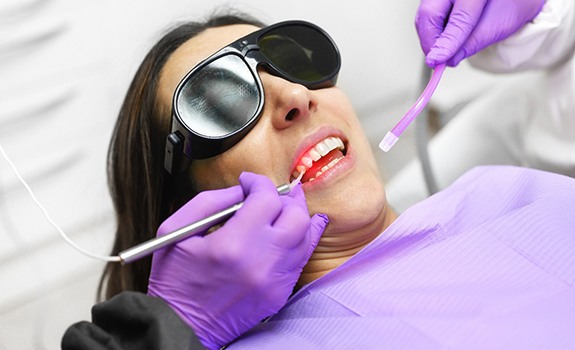
Gum tissue that has become severely damaged due to periodontal disease can be quickly and more comfortably removed with a soft tissue laser. This treatment is more precise than other methods that utilize a scalpel, allowing us to leave more of your healthy tissue intact. This in turn makes it much easier for the tissue to reattach to your teeth and protect their vulnerable roots. Furthermore, with laser gum disease treatment, you won’t need stitches or sutures, which means your recovery will be faster, more comfortable, and you’ll have a much lower risk of developing an infection as you heal.
How Laser Periodontal Treatment Works
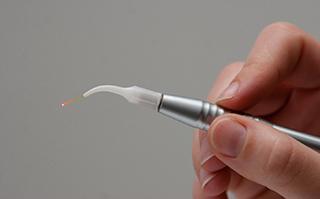
Laser periodontal treatment isn’t a standalone treatment, it is typically done in conjunction with scaling and root planing, or at various stages of gum disease to minimize inflammation and prevent the spread of infection.
Traditionally, dentists removed damaged gum tissue with a scalpel and then closed the incisions with sutures. However, while effective, this treatment had a long healing process and often took more healthy tissue than necessary. The good news is that today’s laser gum disease treatment takes much of the discomfort out of the procedure by using a soft tissue laser to minimize the bacteria and vaporize seriously damaged tissue. This makes treatment much less invasive and much more comfortable.
The soft-tissue laser also has the unique ability to kill bacteria that has accumulated around the teeth, helping your body’s natural infection fighting process and promoting healing. The remaining healthy tissue can then safely reattach to the teeth, protecting their vulnerable root structures. This is very important, because when bacteria can access the roots of the teeth, it is more likely to result in permanent tooth loss.
Once this portion of the treatment is complete, your dentist can then move on to the scaling and root planing process, which removes the tartar from your teeth and planes the roots so the healthy gum tissue can reattach to them.
The Benefits of Laser Periodontal Treatment
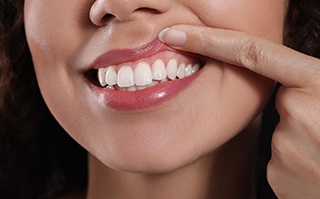
It’s easy to see why so many patients prefer the soft-tissue laser over removing damaged tissue with a scalpel. Some of the incredible benefits of laser gum disease treatment include:
- Less invasive treatment.
- Dangerous oral bacteria are killed on contact.
- No need for stitches or sutures.
- Laser treatment usually results in more comfortable healing, including less bleeding and inflammation thanks to its ability to cauterize the tissue as it works.
- Cauterizing tissue minimizes the risk of post-operative infections.
- The concentrated light emitted from the laser can target only the affected tissue, leaving more healthy tissue intact.
- Reduces the risk of future infections, making it more effective than traditional surgery methods.
Aftercare Tips for Laser Periodontal Treatment

The great news about laser periodontal treatment is that recovery is much faster than it would be with traditional methods. In fact, most patients are completely healed in about one week, as compared to two to four weeks with non-laser gum surgeries.
Following your treatment, you may experience some swelling or sensitivity. In many cases, this can be easily alleviated with over-the-counter pain relievers like ibuprofen.
Be sure to maintain your oral hygiene while you heal, including brushing twice a day and flossing daily.
Because you may notice some initial sensitivity, temporarily avoid certain foods, especially anything hot, cold, or spicy.
You will likely need a follow-up visit to check on the progress of your healing, so be sure to attend that appointment. In the meantime, if you experience anything out of the ordinary or if your pain worsens instead of improving, please contact us as soon as possible.
Scaling & Root Planing

Gum disease is treatable in its early stages and through scaling and root planing, even more severe forms of it like periodontitis can become manageable. This deep cleaning procedure aims to remove plaque and tartar from beneath your gumline, targeting hard-to-reach bacteria that cause gum inflammation. At Dental Center of Lakewood, our team uses advanced techniques to ensure that your scaling and root planing procedure is effective and comfortable, reducing the risk of further dental issues. If you’d like to know more about the process, continue reading below.
Do I Need Scaling & Root Planing?

Scaling and root planing may be recommended if you’re showing signs of gum disease, like red or swollen gums, bleeding while brushing, or persistent bad breath. These symptoms are often the first signs of gingivitis, the mildest form of gum disease. At this stage, better oral hygiene may be enough to reverse the effects, however it’s not always a guarantee.
If left untreated, gingivitis can worsen into periodontitis, leading to bone loss and, eventually, tooth loss. At your consultation, our team can assess your gums and determine if this deep cleaning is necessary to restore your oral health.
The Process of Scaling & Root Planing

The scaling and root planing procedure is performed in two stages:
- Scaling: Plaque and tartar are carefully removed from above and below the gumline, targeting hard-to-reach areas to eliminate harmful bacteria.
- Root Planing: The root surfaces are smoothed to make it harder for bacteria to reattach, allowing your gums to heal.
This procedure may require one or more appointments, depending on the severity of your issue. At our practice, Dr. Spillman and Dr. Green prioritize patient comfort and efficiency, offering options to manage discomfort during the procedure while making it as quick and effective as possible.
Aftercare Tips for Scaling & Root Planing

After scaling and root planing, it’s essential to follow a few aftercare steps to promote smooth and effective healing:
- Avoid eating hard or sticky foods for the first 48 hours after treatment. Stick to soft meals.
- Rinse gently with warm salt water to soothe any gum tenderness.
- Practice good oral hygiene, including brushing and flossing daily, to prevent bacteria buildup. However, be very gentle around your gumline until it heals.
- Avoid smoking, vaping, and alcohol for at least 72 hours after your treatment.
Gum Disease Treatment FAQs
What are the risks of untreated gum disease?
Gum disease is one of the leading causes of tooth loss in the United States and is one of the most impactful risks of leaving the issue untreated. Starting out in its early stages of gingivitis, gum disease can typically be maintained and even reversed with good at-home oral hygiene, and possibly minor treatment like a deep cleaning. However, as it progresses, the effects can become not only more uncomfortable, but also cause your smile to sustain permanent damage. Our goal at Dental Center of Lakewood is to spot and treat the signs as early as possible.
If I have gum disease, how often do I need to have my teeth cleaned?
If Dr. Spillman or Dr. Green diagnoses you with gum disease, our team will create a treatment plan for you to help get your smile in good health again. Once we’re able to get your symptoms under control, we’ll create a maintenance plan. In some cases, we recommend that our patients with periodontitis come in every three months for regular cleanings to prevent tooth loss and control the progression of the infection. However, not every patient is the same, which is why we create personalized maintenance and treatment plans!
Can gum disease be cured?
In its earliest stage, called gingivitis, the symptoms of gum disease can be completely reversed. However, when gum disease has a chance to progress into periodontitis, the infection can only be managed to minimize the symptoms, as opposed to completely reversed. In short, it is possible to cure gum disease, but only when it hasn’t progressed in severity.
Are there health risks associated with gum disease?
For the past several years, countless studies have been released linking gum disease to an increased risk of a number of medical problems. This is because the bacteria that accumulate along and beneath the gumline can eventually enter the blood stream, traveling to impact other areas of the body when left unchecked. Some of the conditions that have been connected to gum disease include:
- Diabetes
- Pneumonia and other respiratory diseases
- Heart attack
- Stroke
- High blood pressure
- Rheumatoid arthritis
- Liver disease
- Alzheimer’s disease and dementia
- Kidney disease
It’s important to note that there is not a direct cause and effect relationship between these medical conditions and gum disease, but that they’re linked to each other. In some cases, this could mean that if you have other risk factors of strokes as well as gum disease, it could increase your risk even more of experiencing one.
With your health at the top of our list of priorities, our team at Dental Center of Lakewood aims to make sure your oral health remains on track with regular screenings for gum disease at each of your bi-annual checkups and cleanings.
How common is gum disease?
The Centers for Disease Control and Prevention estimates that one out of every two adults in the United States has gum disease. Statistics also show that more adults over the age of 65 have periodontitis. Those with autoimmune conditions or who are pregnant are typically at a higher risk of gum disease as well.
What risk factors are associated with gum disease?
There are several risk factors that can increase your chances of developing gum disease, including:
- Smoking – Those who smoke, vape, or use tobacco products are at a higher risk of gum disease due to chemical inflammation and reduced saliva production.
- Genetics – If your parents had gum disease, you may be more likely to develop the disease as well.
- Medical Conditions – Autoimmune conditions such as diabetes can put you at a higher risk of infection, including gum disease.
- Certain Medications – Anti-depressants, oral contraceptives, and other medications are known to increase the risk of gum disease.
For all of these reasons, it’s important to discuss your history and medications with your dentist in detail so they can assess your risk and help you build good habits to keep your oral health on the right track.
What’s the best way to prevent gum disease?
The best way to prevent gum disease is to maintain good at-home and professional oral hygiene practices. This includes visiting our office in Dallas every six months for checkups and cleanings, brushing your teeth twice a day for two minutes, flossing at least once a day, and rinsing with antimicrobial mouthwash.
How can I manage gum disease while I’m pregnant?
If you’re pregnant, you’re at a higher risk of developing gum disease. Personalized management tips from your dental hygienist and dentist can help any symptoms from progressing as well as keep your oral health in the green during your pregnancy.
Will I eventually lose my teeth with gum disease?
No, it’s not a given that you will lose your teeth if you have gum disease in Dallas. In fact, with early diagnosis and intervention, some patients are able to reverse their symptoms altogether. If you have late-stage gum disease, routine maintenance visits, including deep cleanings, can help prevent tooth loss.